
Last Updated on September 23, 2026 by Candi Randolph
I used to keep a running list of things I was supposed to be doing for my health. Drink more water. Move more. Sleep better. Eat cleaner. It lived on a sticky note that migrated from the fridge to my nightstand to my purse, and somewhere along the way it stopped feeling like guidance and started feeling like a report card I was quietly failing.
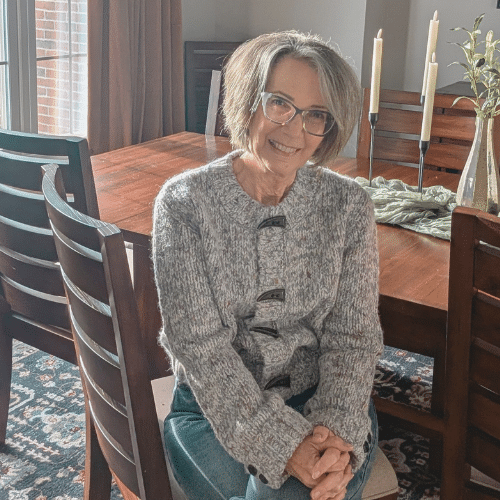
Somewhere in my sixties, I put the sticky note away. Not because I stopped caring about my health, but because I finally noticed something. The habits that actually stuck weren’t the ones I forced onto a list. They were the small, almost boring things I kept doing without needing a reminder, because they made me feel steadier in my own body.
That’s really what healthy aging comes down to, at least the version of it worth paying attention to. Not a stricter routine. Not another rule to follow. Just a handful of habits that quietly hold you up, day after day, whether you’re thinking about them or not.
Here are the ones that have earned their place in my life, and why I think they might earn a place in yours too.
If you click on a link and then make a purchase, I may earn a small commission at no additional cost to you. Thank you!
Movement That Doesn’t Feel Like a Workout
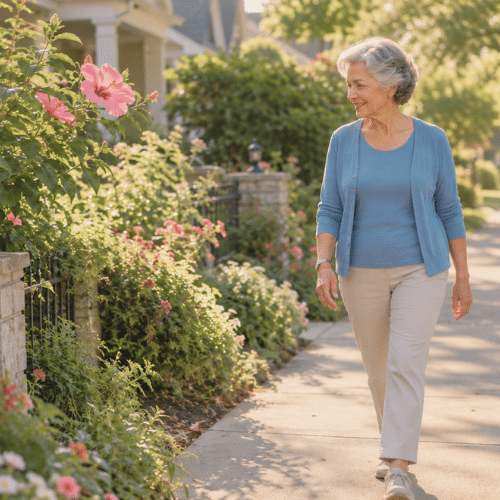
Movement is the habit that gets the most conflicting advice, and I think that’s exactly why so many women give up on it. One expert tells you to lift weights. Another tells you cardio is what matters. Somewhere in between, you’re supposed to be doing yoga, stretching, and ten thousand steps a day, and none of it sounds like something you’d actually want to do on a Thursday afternoon.
For me, walking has become the answer, though I’ve come to see it as two different habits wearing the same shoes. There’s the brisk walk, the one with a real pace to it, the one that gets my heart working and reminds my body what it’s capable of. That’s an important part of my overall wellness, and I don’t skip it. But there’s also the slower walk, the kind with no pace at all, where I notice the neighbor’s hibiscus and let my thoughts wander wherever they want to go. I used to think that one didn’t really count. I was wrong. It counts just as much, only in a quieter way.
Here’s what I’ve come to believe about movement at this stage of life. It isn’t only about intensity, and it’s not only about how many calories you burned or how sore you feel afterward. It’s about consistency, and about choosing something your body genuinely enjoys, because that’s the only kind of movement that survives past January. The brisk walk keeps my body strong. The slow walk keeps something else in me steady, and I’ve stopped ranking one above the other.
Maybe walking is your thing too, in one form or both. Maybe it’s gardening, which somehow never feels like exercise even though your knees know better by the end of the afternoon, or gentle stretching while the coffee brews. Whatever it is, it counts. It counts because it keeps your joints moving, your balance steady, and your body familiar with the simple act of getting up and doing something, which matters more than we realize until it’s harder to do.
If you take one thing from this section, let it be this: the best kind of movement isn’t the one that impresses anyone. It’s the one you’ll still be doing next year, in whichever pace it comes.
Hydration, and Why It Matters More Than It Used To
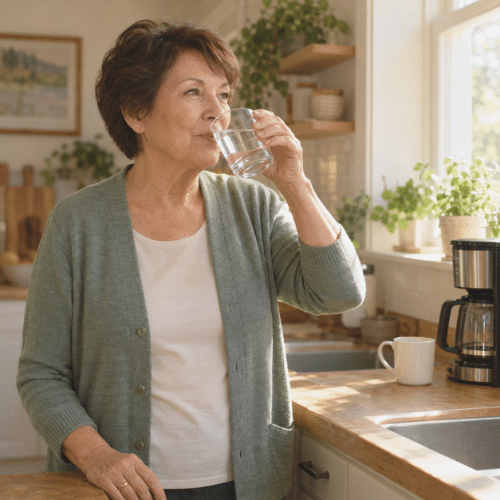
Hydration is one of those pieces of advice that’s been repeated so many times, it’s easy to tune it out entirely. Drink more water, we’re told, as if that alone will fix whatever’s going on. But somewhere in my sixties, I started noticing something the general advice never mentioned. It’s not just how much water I drink, it’s how differently my body responds to it now.
Skin that used to bounce back overnight doesn’t quite do that anymore. Energy dips that used to be about sleep started showing up on days I’d barely had anything to drink. That’s when hydration stopped being background noise for me and became something I actually paid attention to.
A few hydration tips that have made an actual difference, not the kind that require tracking apps or measuring cups. I keep a glass of water on the counter where I’ll see it, and I carry it around the house with me sometimes, because out of sight really does mean out of mind at this age. I start the morning with a glass of water before coffee, since coffee has a way of undoing what it doesn’t replace. And I’ve stopped waiting until I feel thirsty, because thirst shows up later than it used to, which is exactly the kind of thing nobody warns you about.
There’s a skin side to this too. Some of what we chalk up to aging skin is really just thirsty skin, and while water alone won’t undo every change, it does more quiet work than we give it credit for. It shows up in small ways, skin that looks a little less tired, a little more like itself.
None of this is complicated. It’s just a habit that asks for a little more attention than it used to, and gives back more than you’d expect in return.
Sleep as Self-Respect, Not a Luxury
Sleep is the habit I’m most guilty of treating like a luxury instead of a necessity. If life got busy, sleep was the first thing I sacrificed, as though eight hours were something I’d earn once everything else was handled. It took me longer than I’d like to admit to realize that backwards thinking, sleep isn’t the reward for a productive day. It’s what makes the next one possible.
What’s changed for me isn’t complicated, but it’s made a real difference. A consistent bedtime matters more now than it used to, my body seems to notice inconsistency in a way it didn’t in my thirties. I’ve also stopped treating the hour before bed as an extension of the day. No scrolling through the news, no answering one more email. Just something quieter, a book, a bit of stretching, the kind of winding down that actually signals to my body it’s time to rest.
Among the better sleep tips I’ve collected over the years, the one that’s made the biggest difference is the simplest. Keep the room cool and dark, and protect that first hour of sleep like it matters, because it does more of the repair work than the rest of the night combined.
None of this guarantees a perfect night. Some nights still don’t cooperate, and that’s just part of it. But treating sleep as self-respect rather than an afterthought has changed how I move through my days, not just how I feel when I wake up.
Feeding the Body You Actually Have Now
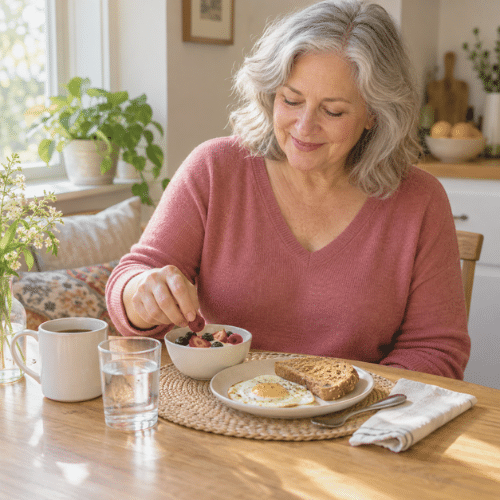
Nourishment is the habit I approach differently now than I did even ten years ago, and not because I found a better diet plan. I stopped looking for one. What changed instead was paying attention to what my body actually seems to want and need at this stage, which is quieter and less dramatic than anything a diet book ever promised.
Building healthy eating habits at this age isn’t about restriction, and it isn’t about running after whatever the latest trend claims will fix everything. It’s about noticing. I eat less than I used to, not because I’m trying to, but because my body simply asks for less. I’ve learned to trust that instead of overriding it. I also notice I feel steadier on days when protein shows up at breakfast instead of an afterthought at dinner, and when I don’t go too long between meals, because my energy dips harder now than it used to.
I’ve also come to see eating whole, clean foods regularly less as a rule and more as a quiet form of respect for my body. Not a diet, not a phase, just a wise choice about what I’m putting into myself on an ordinary Tuesday, the kind of choice that adds up in ways you don’t notice until years later. And if I really want that treat, a boost of sugar, I will give myself permission – within reason – to enjoy it.
None of this looks impressive on paper. There’s no meal plan to hand you, no list of foods to avoid. It’s really just permission to feed the body you actually have now, the one in front of you today, instead of the one you used to have or the one some article insists you should have. That shift alone has done more for how I feel than any specific food ever did.
Listening to What’s Underneath
There’s a habit that doesn’t fit neatly into any wellness checklist, and it might be the most important one in this whole post. Checking in with how I actually feel. Not how I’m supposed to feel, not how I looked on paper that day, but what’s really going on underneath.
For most of my life, I was better at listening to my body than my heart. I’d notice a headache and reach for water. I’d notice fatigue and know it was time for rest. But sadness, worry, that quiet unsettled feeling that shows up for no clear reason, those I learned to push past instead of pay attention to. As if emotional health were separate from the rest of my wellbeing instead of woven right through it.
It isn’t separate. The mind body connection is real, and at this stage of life I notice it more than ever. A restless night often traces back to something I never let myself feel the day before. A tense shoulder sometimes has less to do with how I slept and more to do with what I’ve been avoiding thinking about. When I actually pause and ask myself how I’m doing, really doing, the answer tells me something useful almost every time.
This habit doesn’t look like much from the outside. Some days it’s a few quiet minutes with a cup of coffee before the day gets loud, just checking in with myself. Other days it’s noticing I’m irritable and asking what’s actually underneath that instead of brushing past it. It’s less a task and more a willingness to keep listening, to your body, your mind, and your heart, as though what they’re telling you actually matters. Because it does.
The Habit Nobody Puts on the List: Slowing Down
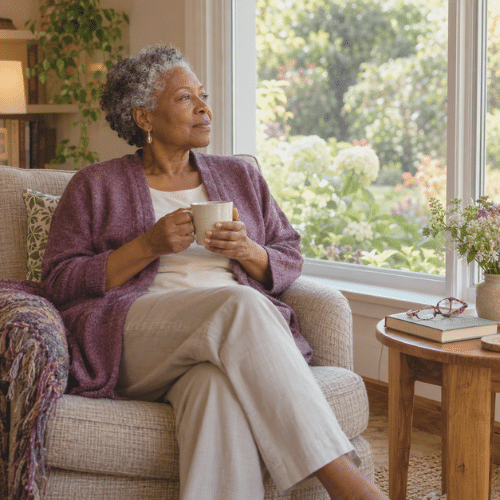
Nobody puts this one on the list, but I think it belongs at the top. Somewhere along the way, I started treating a full calendar as proof I was living well. Busy meant I mattered. Slow felt like falling behind. It took me longer than I’d like to admit to realize I had that backwards.
Slowing down isn’t about doing less because you have to. It’s about choosing what actually supports you instead of filling every hour just because you can. A morning with nowhere to be. A meal eaten at the table instead of standing at the counter. Time with no purpose attached to it other than being present for it. These aren’t consolation prizes for a quieter life. They’re the parts of the day I’ve come to protect the most.
This, more than any product or routine, is what aging gracefully has come to mean for me. Not smoother skin or a fuller schedule of accomplishments, but a life with enough room in it to actually notice you’re living it.
If the other habits in this post are things you do, this one is something you allow. And it might be the hardest habit on the list, simply because nobody hands you permission for it. You have to take it yourself.
Where This Leaves You
None of these habits will make headlines. There’s no dramatic before and after here, no thirty day challenge, no product to buy at the end of this post. Just walking, water, sleep, food that respects your body, listening to what’s underneath, and permission to slow down. Ordinary things, held onto consistently, which turns out to be the whole secret nobody tells you about.
If you take nothing else from this, take this. You don’t need to overhaul your life to feel steadier in it. You just need a few habits you can actually keep, chosen because they support the life you have now, not the one you think you should be living. That’s healthy aging, at least the version worth paying attention to. Not a finish line. Just a way of moving through your days that feels a little more like yourself.
Start with one. See how it feels. The rest can wait until you’re ready for them.
Such a great and practical article! Thank you, thank you!
Hi Glenna, thanks so much for letting me know, I’m glad you found it helpful. 💗
Such a refreshing article. You have motivated me to apply a sweeter more thoughtful quality to the practice of daily living.
Thank you!
Hi Terri, I’m so glad these thoughts made a difference for you, thanks for letting us know! 💗