
Last Updated on March 17, 2026 by Candi Randolph
I used to think strength training was just for people who lived in workout clothes and liked grunting in front of mirrors. You know the type – perfect ponytail, not a wrinkle in sight, lifting weights that look like small furniture. It didn’t exactly feel like my scene. But something shifted when I realized that strength training isn’t just about muscle tone or looking good in sleeveless tops. It’s about how it makes you feel – mentally, emotionally, and yes, physically stronger in every way.
If you’re like most women I know in their 60s, 70s, and beyond, you’re not chasing six-pack abs. You want to feel steady on your feet, clear in your mind, and confident as you move through your day. You want to walk into a room (or a new stage of life) with a strong back and a stronger sense of self. That’s where the real benefits of strength training for mental health for women start to show up.

The truth is, strength training for women over 60 goes far beyond building muscle. It can help manage stress, improve sleep, boost your mood, and even bring a sense of calm to those busy, overthinking brains of ours. That’s not just wishful thinking; it’s science. The connection between exercise for mental health and physical movement is well-documented, and strength training is especially powerful in that department.
And before you start picturing barbells the size of your living room couch, let me say this: at home strength training counts. Using resistance bands, water bottles, or your own body weight can be just as effective – no gym membership or spandex required. Whether you’re easing into an over 50 exercise plan or getting back into a routine after a long break, the point is to move in a way that supports both your body and your mind.
So no, this post isn’t about how to increase muscle mass like a 30-something bodybuilder. It’s about understanding how strength training helps with everything from bone loss to brain fog, from posture to peace of mind. Whether your goal is to improve heart health, lift your spirits, or simply keep working out in a way that feels good and sustainable, you’re in the right place.
Let’s talk about what it really means to feel strong, not just on the outside, but on the inside where it counts the most.
If you click on a link and then make a purchase, I may earn a small commission at no additional cost to you. Thank you!
- Why Mental Health Deserves Just as Much Attention
- The Science Behind Strength and Mental Wellness
- Real-Life Mental Benefits You Might Notice
- Getting Started Is Easier Than You Think
- A Few Gentle Reminders
- Strength Training Exercises to Try at Home (No Gym Required)
- Grab the Free Resource Printable of these Exercises
- Closing Thoughts
Why Mental Health Deserves Just as Much Attention

Somewhere along the way, mental health got shoved into the “optional” category, especially for women over 60. We’re expected to power through, hold it all together, smile politely, and maybe sneak in a little quiet stress behind closed doors. But let’s be honest – just like our bones and muscles, our emotional well-being needs support too. And in our 60s and beyond, it matters more than ever.
This stage of life can bring some beautiful shifts – freedom, clarity, a little more wisdom – but it also comes with its fair share of challenges. Hormonal changes, caregiving pressures, health worries, the passing of loved ones, or simply feeling a bit lost after years of caring for everyone else. It’s a lot. And pretending otherwise doesn’t make it disappear. That’s why acknowledging and caring for your mental health is not just a good idea – it’s essential.
That’s where strength training for mental health quietly steps in. We often think of exercise in terms of shrinking something – shrinking our waistlines, shrinking our risk of disease. But what if we thought about it as expanding something? Expanding our energy, our peace of mind, our resilience. One of the most underrated strength training benefits for women isn’t about physical appearance at all – it’s the inner steadiness that starts to take root.
When we talk about strength training for women over 60, we’re not talking about flipping tires in a parking lot (unless that’s your thing, in which case – carry on, girlfriend). We’re talking about showing up for yourself in small, sustainable ways. At home strength training – using your body weight, resistance bands, water bottles, or even cans of soup – can be a quiet but powerful way to process stress, lift your mood, and feel more like yourself again.
Mental health isn’t something we should wait to address until everything falls apart. Just like we create an exercise plan to prevent bone loss and increase muscle mass, we can approach our emotional well-being with the same intention. Strength training benefits go far beyond the mirror. They ripple out into our relationships, our outlook, our ability to sleep, laugh, and simply enjoy the moment.
So yes, getting fit and strong in midlife is wonderful, but let’s not forget what’s going on between our ears. When you move your body, you’re not just building strength. You’re reminding yourself that you matter. And that might be the most powerful workout of all.
The Science Behind Strength and Mental Wellness
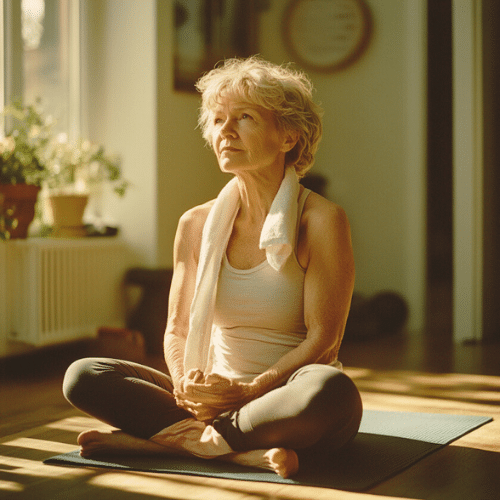
Let’s talk science – but in the real-life, “this actually matters to me” kind of way. You’ve probably heard that strength training can help you increase muscle mass, support your joints, and maybe even make it a little easier to get up off the floor without sounding like a Rice Krispie treat. But here’s what doesn’t get talked about nearly enough: the powerful connection between strength training and your mental health.
When you move your body with intention – whether it’s lifting light hand weights in your living room or doing a few chair squats while waiting for the coffee to brew – your brain gets a noticeable boost. Strength training for mental health works by encouraging the release of feel-good chemicals like endorphins and serotonin. These are the same little brain helpers that lift your mood and ease anxiety without asking for a co-pay. And no, you don’t have to do an intense exercise plan to benefit. Even short, gentle movement can make a difference.
Another big perk? It helps with stress. Cortisol, the hormone responsible for that frazzled, overwhelmed feeling (you know the one), tends to calm down when you make strength training part of your routine. That’s why so many women report that their minds feel quieter and more grounded after a session—even if that session is just 10 minutes in the living room with their favorite playlist.
Plus, there’s the sleep connection. One of the lesser-known strength training benefits for women is how it supports deeper, more restful sleep – something that tends to get trickier with age. When you’re moving your body regularly, especially with strength-based exercises, you’re giving your system the nudge it needs to relax, restore, and reset.
And let’s not forget your brain itself. Research shows that strength training for women over 50 can actually help with cognitive function—sharpening focus, supporting memory, and giving you that “I’ve still got it” energy. It’s one of the best forms of exercise for mental health because it works on both the physical and emotional layers of wellness.
Bottom line? The benefits of strength training for women aren’t just about getting fit or managing bone loss. They’re about creating a sense of emotional balance, reducing worry, and building confidence from the inside out. And whether you’re doing at home strength training or hitting a class at the local rec center, what matters most is that it works for you.
Real-Life Mental Benefits You Might Notice
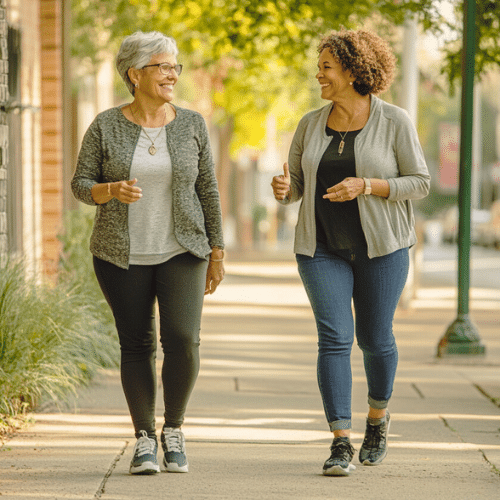
Here’s the thing no one really tells you about getting fit in your 60s – it’s not just about stronger arms or bones (though those are great too). It’s what happens inside that can really shift. The way you carry yourself. The way you feel about starting your day. The quiet boost in confidence when you realize you’re doing something just for you. Let’s talk about a few of the mental and emotional benefits you might start noticing when strength training becomes part of your weekly rhythm.
You feel more in control. There’s something incredibly grounding about strength training for women 60 and over. Whether you’re pressing a set of light hand weights or doing squats at the kitchen counter, it’s not just about the motion, it’s about the message you’re sending to yourself. “I’ve got this.” That sense of control can spill over into other areas of life, especially during times that feel anything but predictable.
Your mood gets a noticeable lift. You don’t need to do a full-body bootcamp to feel it, either. A few sessions of at home strength training each week can help regulate those stubborn stress levels. It’s one of the most underrated forms of exercise for mental health. And when your body gets moving, your mind follows suit – it’s like turning on a light in a dim room.
Sleep tends to come easier. That quiet kind of exhaustion after a good movement session – especially strength training for mental health – is the kind that helps you drift off instead of lying awake thinking about tomorrow’s to-do list. Plus, quality sleep helps you manage mood, memory, and focus, so it’s all connected.
You think more clearly. Literally. One of the lesser-known benefits of strength training for women is that it supports brain health, not just muscle mass. When you’re exercising regularly, your body pumps more oxygen to your brain, which helps improve memory, focus, and mental clarity. Even something as simple as learning a new movement pattern supports your cognitive function. It’s like mental gymnastics – without the leotard.
You feel proud of yourself. And yes, that counts as a mental health benefit. When you stick with a simple exercise plan, you’re showing up for yourself again and again. It builds resilience. It strengthens your self-trust. And as you increase muscle mass and improve heart health, you’re also giving yourself the tools to handle daily stress, reduce anxiety, and support your emotional well-being. That’s what I call a well-earned win.
And let’s not forget – you’re helping your body fight off bone loss and stay stronger for the long haul. So yes, strength training benefits for women absolutely include more energy, steadier balance, and stronger bones. But the real magic? It’s how you start to feel like yourself again. Maybe even a more grounded, steadier, more hopeful version.
Getting Started Is Easier Than You Think
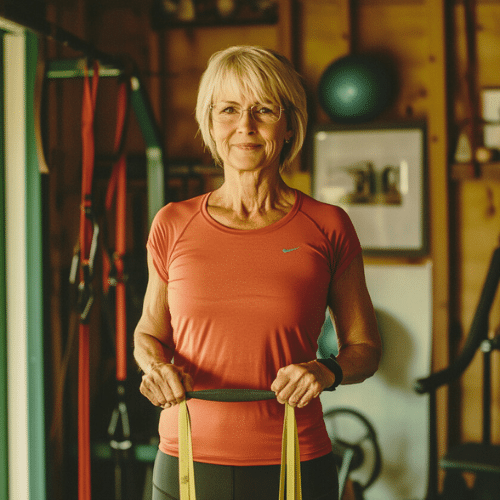
You don’t need a gym membership, fancy leggings, or a personal trainer named Chad yelling motivational quotes to start seeing the benefits of strength training for women. Honestly, getting started is a lot simpler, and gentler, than you might think. Strength training for women over 60 can be as un-intimidating as doing a few arm curls with soup cans in your kitchen or standing leg lifts while brushing your teeth. (Yes, that counts. And yes, it still burns a little.)
One of the best things about strength training for mental health is that it fits right into your life, no rearranging needed. You can begin with short, low-impact movements that build muscle gradually. Think 5 to 10 minutes a few times a week. That’s it. If you’re dealing with bone loss or just want to maintain your independence and energy, this is one of the smartest steps you can take.
You don’t have to follow a rigid exercise plan either. Start small. Do bodyweight squats while waiting for your coffee to brew. Try some standing push-ups against the kitchen counter. These kinds of at home strength training moves gently increase muscle mass and improve heart health without making you feel like you’re trying out for a superhero movie.
The real magic? As you keep going, you’ll start to notice subtle but powerful shifts. You’ll feel steadier. More energized. Maybe even a little sassier. The strength training benefits for women go way beyond just looking toned – they help with getting fit and feeling mentally grounded. That’s a pretty great combo, especially when you’re just trying to get through your week without losing track of your keys or your patience.
So if you’ve ever thought, “I should probably start something,” this is your gentle nudge. Choose one simple move today and try it. That’s how it begins. You’re not doing this to become someone else, you’re doing it to support the amazing woman you already are.
A Few Gentle Reminders
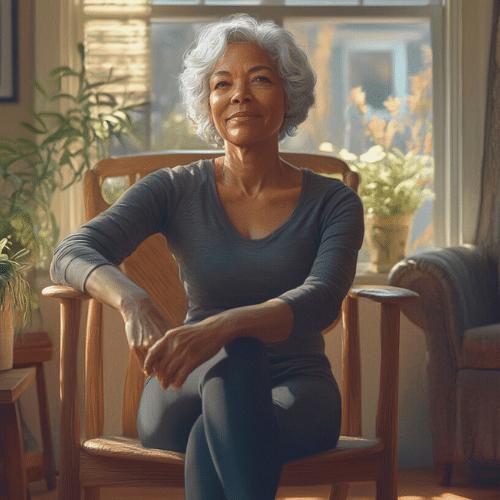
It’s easy to forget that how we move our bodies – especially in our 60s and beyond – is just as important as why we’re doing it. Strength training for women over 60 isn’t about sculpting biceps to rival a fitness model or bench-pressing your grandchildren (though if you’ve got the strength for that, more power to you!). It’s about feeling good in your own skin, supporting your mental well-being, and creating a lifestyle that keeps you steady, strong, and smiling.
Here’s the thing: your workouts don’t have to be intense, long, or complicated to make an impact. Whether you’re doing at home strength training with a pair of soup cans or squeezing in ten minutes of squats and wall push-ups before breakfast, it all counts. And yes, even small amounts of movement can offer meaningful strength training benefits, physically and mentally. The goal here isn’t to be perfect. It’s to be present.
Maybe the most important reminder? You’re not “behind.” You’re right where you need to be. Starting strength training for mental health doesn’t require a new personality, a gym membership, or matching leggings. It requires one thing: a willingness to show up for yourself, in your own way. That’s it.
So if you’re over 60, working out and wondering if it’s worth it – yes. If you’re concerned about bone loss, low energy, or feeling overwhelmed – yes, again. The benefits of strength training for women go beyond toned arms and stronger legs. They touch your confidence, your mood, your heart (literally—it can improve heart health), and your sense of “I’ve got this.”
Anther gentle nudge: there’s no deadline to getting fit. Just today, and whatever you choose to do with it. That 5-minute stretch? It counts. That walk around the block with a few added arm swings? It counts. This is your over 50 exercise plan, your story. So give yourself credit. You’re showing up—and that matters more than you know.
Strength Training Exercises to Try at Home (No Gym Required)
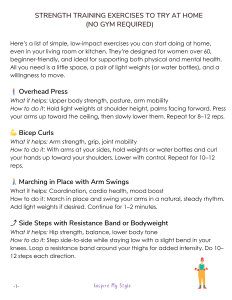
Here’s a list of simple, low-impact exercises you can start doing at home, even in your living room or kitchen. They’re designed for women over 60, beginner-friendly, and ideal for supporting both physical and mental health. All you need is a little space, a pair of light weights (or water bottles), and a willingness to move. I’ve got a free printable for you, too, if you want to keep this resource with you! You can grab it at the bottom of this section.
Remember to check in with your doctor if you have any questions about exercising, have existing health conditions, or aren’t sure which types of exercises are best for you. These are just simple suggestions.
Overhead Press
What it helps: Upper body strength, posture, arm mobility
How to do it: Hold light weights at shoulder height, palms facing forward. Press your arms up toward the ceiling, then slowly lower them. Repeat for 8–12 reps.
Bicep Curls
What it helps: Arm strength, grip, joint mobility
How to do it: With arms at your sides, hold weights or water bottles and curl them up toward your shoulders. Lower with control. Repeat for 10–12 reps.
Marching in Place with Arm Swings
What it helps: Coordination, cardio health, mood boost
How to do it: March in place and swing your arms in a natural, steady rhythm. Add light weights if desired. Continue for 1–2 minutes.
Side Steps with Resistance Band or Bodyweight
What it helps: Hip strength, balance, lower body tone
How to do it: Step side-to-side while staying low with a slight bend in your knees. Loop a resistance band around your thighs for added intensity. Do 10–12 steps each direction.
Chair Squats
What it helps: Leg strength, joint stability, balance
How to do it: Stand in front of a sturdy chair, feet hip-width apart. Lower your hips as if to sit, then press through your heels to return to standing. Repeat for 8–10 reps.
Standing Calf Raises
What it helps: Ankle strength, circulation, stability
How to do it: Hold onto a chair or wall for balance. Lift your heels off the ground, hold briefly, then lower. Repeat 10–15 times.
Arm Circles and Shoulder Rolls
What it helps: Shoulder flexibility, tension relief
How to do it: Extend arms and make small circles forward and backward. Follow with 5–10 shoulder rolls in each direction.
Wall Push-Ups
What it helps: Upper body strength, chest, and core
How to do it: Stand a few feet from a wall, place hands shoulder-width apart, and lean your chest toward the wall, then push back. Do 8–10 reps.
Core Engagement While Standing
What it helps: Posture, abdominal strength, stability
How to do it: Stand tall, draw your belly button gently toward your spine, and hold for 10 seconds. Release and repeat throughout your walk or during daily tasks.
Grab the Free Resource Printable of these Exercises
You’ll find this printable, Strength Training Exercises to Try at Home, in the Healthy Living & Wellness section of the Resource Library. All you need is the password, and you can easily get that by completing the form below:
Closing Thoughts
There’s something incredibly powerful about feeling strong, not just physically, but emotionally. And the beautiful part is, you don’t need to overhaul your life or lift anything heavier than a tote bag full of canned goods to get started. The act of showing up for yourself, even for 10 minutes a day, sends a message that your well-being matters. That message? It sticks.
When I first started doing a bit of at home strength training, I wasn’t trying to increase muscle mass or sculpt anything impressive. I just wanted to feel better. What surprised me was how quickly it started to shift things, not just in my body, but in my mindset. That’s the thing about strength training for mental health: it reminds you that you’re capable. It gives you small, steady wins that add up.
The truth is, the benefits of strength training for women in our 60s and 70s go far beyond toned arms or stronger legs (although those are nice perks). From helping reduce bone loss and improving balance to supporting hormone regulation and even heart health, it all circles back to one simple idea – when you move with intention, you care for every part of yourself.
And if you’ve ever thought, “Well, I’ve never really been into working out after 60,” let me just say: it’s never too late. Whether you’re starting with a basic exercise plan or easing into things with light bodyweight moves, you’re not behind, you’re right on time. You don’t need a gym. You don’t need a fancy routine. Just some space, a little consistency, and the willingness to keep going.
So here’s your gentle nudge: take that walk, lift those soup cans, stretch those arms. Let it be imperfect and real and yours. The strength you build on the outside is only part of the story. The confidence, clarity, and peace that come along with it? That’s where the true strength lives.

Like this post? Share it!

Such a powerful reminder that fitness supports not just the body, but the mind as well. The mental health insights here are incredibly motivating!